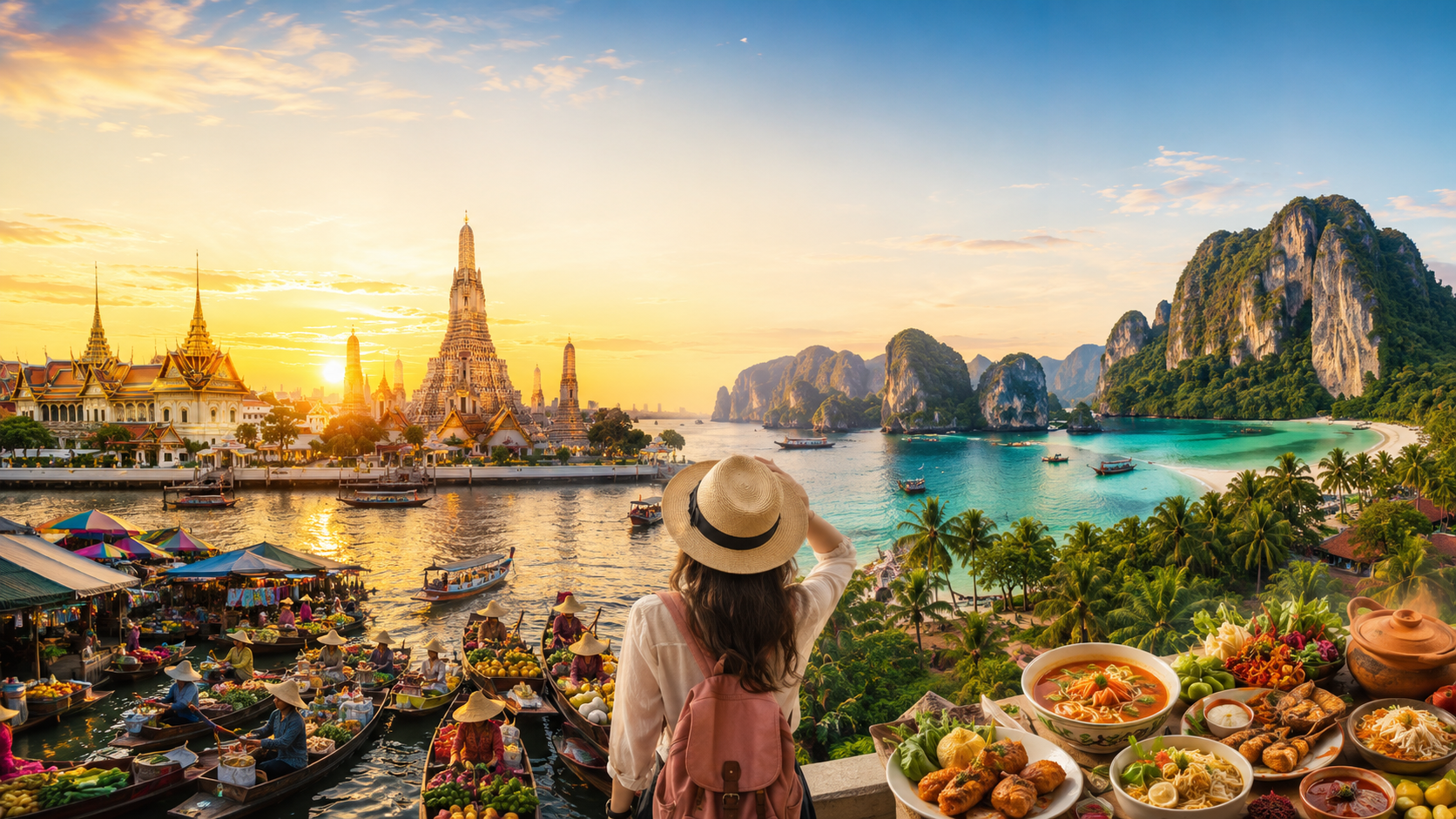
Ask ten different travelers why they keep going back to Thailand, and you’ll probably get ten different answers. Someone will mention the food. Someone else will bring up the beaches, or the temples, or how far their money stretches compared to other destinations. That range of answers is actually the point. Thailand doesn’t appeal to one type of traveler, it appeals to almost all of them, and the numbers back that up just as much as the reviews do.
The Numbers Tell Their Own Story
In 2025, Thailand welcomed close to 33 million international visitors, and even with a dip compared to the year before, that figure is still well above what most countries in the region see in a single year. For context, the pre-pandemic peak in 2019 was just under 40 million, and Thailand’s tourism authority is now targeting nearly that number again for 2026.
What’s more telling than the total count is how long people choose to stay once they arrive. The average international visitor spends more than 9 days in the country, and travelers from some markets, Sweden being a notable example, stay closer to 19 days on average. That’s not the kind of number you get from a place people visit once and cross off a list. It’s the number you get from a place people plan real time around.
Tourism also isn’t a side note for Thailand’s economy, it’s a core part of it, contributing roughly 12% of GDP when direct and indirect effects are counted together. Visitors come from every part of the world too, with Malaysia, China, and India currently topping the list of source markets, alongside steady and growing numbers from Europe, the UK, and the Americas.
It Genuinely Works for Every Kind of Traveler
A lot of destinations are known for one thing. Thailand tends to cover several at once, which is a big part of why it holds such broad appeal.
For culture and history: Bangkok alone has hundreds of temples, and destinations like Ayutthaya and Chiang Mai add centuries of history without needing a long detour to reach them.
For beaches and islands: Phuket, Krabi, and Koh Samui regularly come up in global rankings for good reason, clear water, dramatic limestone cliffs, and islands that still feel worth the boat ride out.
For food: Thai cuisine is one of the most recognized in the world, and unlike a lot of “famous” food destinations, the best meals in Thailand are often the cheapest ones, found at a street stall rather than a restaurant with a menu in three languages.
For value: Even with rising prices in some tourist hubs, Thailand still offers a level of comfort, quality accommodation, private transport, guided tours, that costs noticeably less than comparable trips in Europe or even parts of the Middle East.
For first-timers and repeat travelers alike: Thailand is beginner-friendly (English is widely used in tourist areas, infrastructure is solid, and options for guided travel are everywhere), but it’s also layered enough that longer-term or repeat visitors keep finding new regions worth exploring.
The Shift Toward Slower, More Meaningful Trips
One of the more interesting patterns in recent tourism data is that Thailand’s own tourism authority isn’t just chasing higher visitor numbers anymore. The stated focus going into 2026 is on travelers who stay longer and spend more meaningfully, rather than simply maximizing arrival counts. That lines up with what a lot of travelers are already gravitating toward: fewer rushed, one-week checklist trips, and more relaxed, two-to-three-week stays that actually let a country breathe a little.
This shift is also visible in where people are choosing to go. While Bangkok, Phuket, and Pattaya remain the most visited, there’s a growing pull toward quieter regions and slower-paced experiences, wellness-focused stays, smaller islands, and northern destinations like Chiang Mai, where the pace of daily life is noticeably different from the more built-up coastal cities.
A Country Built Around Hospitality
Numbers explain a lot, but they don’t fully explain why people leave Thailand already thinking about their next visit. That part usually comes down to something harder to measure: how welcomed people feel while they’re there. Thai hospitality has a reputation for a reason, and it shows up in small ways as much as big ones, a night market vendor taking the time to explain a dish, a driver double-checking you’ve got the right directions, a temple guide who clearly enjoys sharing the history rather than just reciting it.
That combination, genuine hospitality, affordability, variety, and a level of comfort that suits both first-time visitors and seasoned travelers, is difficult to replicate elsewhere, and it’s a big part of why Thailand keeps showing up on “favorite destination” lists year after year rather than fading after a single travel trend cycle.

Want a Hassle-Free Bangkok Experience?
Let MM Holidays help with tours, attraction tickets and memorable Bangkok experiences, all in one place.
Final Thought
Thailand’s appeal isn’t built around one attraction or one type of trip. It’s the mix of culture, food, coastline, affordability, and hospitality that keeps pulling different kinds of travelers back, and the tourism numbers over the past few years simply confirm what a lot of visitors already feel after their first trip: one visit is rarely enough.